Regular Planning: Drilled or Constrained?
Have you ever experienced that pang of guilt that comes when you wake your alarm in the third time? Or perhaps it is that Sunday evening fear, looking at an unknown rabble of a week ahead with no idea. We’ve all been there. Routine planning is the magic bullet that is being announced, at least in our hustle-heavy culture (and here in the US and UK, in particular).
The gurus assure them that it is the first step to success, perfect health and lastly, learning that guitar.
But let’s be honest. At times, even the thought of a strict schedule is suffocating. It may not be resembling a weapon of emancipation and may have a certain touch of a life imprisonment of colour-coded diaries. Does careful daily planning indicate the existence of sincere discipline, the strength of success? Or is it but a fanciful type of self-imposed constraint, emaciating life of itself?
The reality is not in black and white. It is not about the decision between precision of the military and complete anarchy. It has to do with discovering your own mix. Let’s unpack this.
The So-called Discipline Side: Why a Plan Feels Like a Superpower.
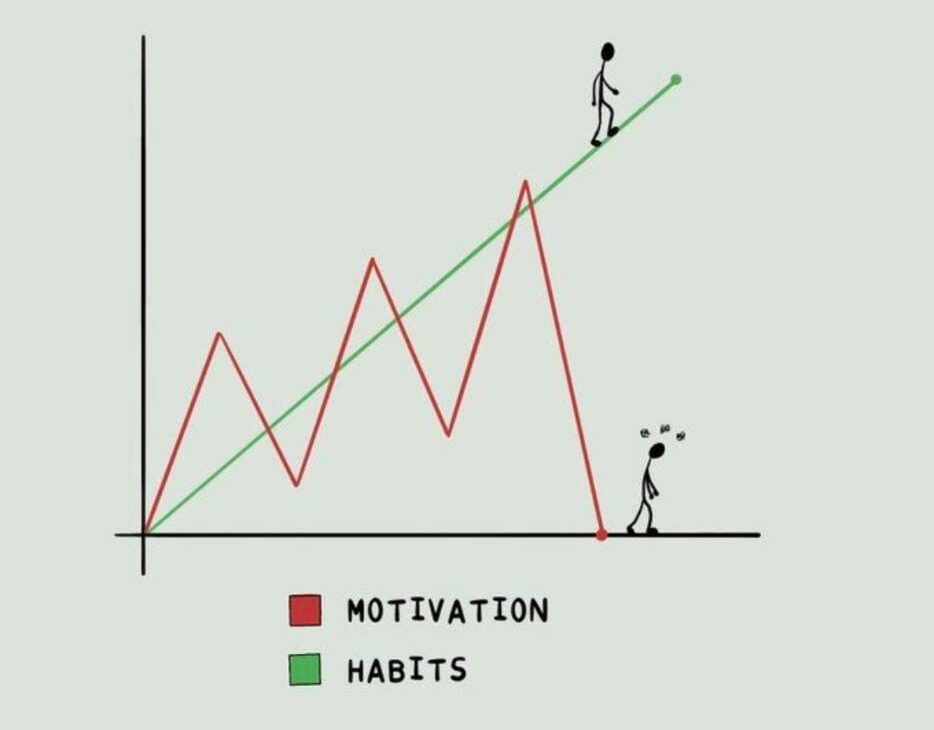
Discipline should not be viewed as punishment, but as training. It’s like building a muscle. You are not erecting walls when you make a good routine, you are just laying a track upon which your train will run and you do not need to dissipate your energies trying to determine the path you want to take on a daily basis.
Take a real-life example. Sarah, a Londoner, would begin her working day (in her Manchester home office) by madly perusing emails, followed by social media, and then on to the news. By ten she was in a frenzy, and had not performed any single significant practical duty. Her habitual scheduling did not exist. She chose to experiment by a basic 60 minute to do one key project, then email. This little helping of daily organization did not hinder her. It relieved her of fatigue of choice. Her career had been anchored in the field that she studied during her first hour.
Or consider health goals. In Chicago, James never had time to get fit as he always wanted to. His strategy was a general one: work out more. It failed. It became sticky only when he put into practice practical scheduling, that is, I will walk 30 minutes on Tuesday and Thursday at 7 PM, right after dinner. It was the planning, and not the action that was done. It eliminated the mind bargaining per night.
The Red Flag of Restriction: When Planning Goes Red Flagging.
Now, let’s flip it. Have you ever known a person (or yourself) whose calendar is made out of a collaboration of back-to-back blocks, such as leisure, and spontaneous fun, which are classified as 4:15 PM?
This is where regular planning enters into repressive realms. Life isn’t software. We can’t debug it perfectly.
The most common example would be the parent that plans each and every hour of his/her kid during the weekend. Soccer, piano, tutoring, playdate. It looks productive on paper. However, where is the time when the child will simply be bored, when he/she will make up a fort, or when the family will choose arbitrarily to go and have ice cream? The intention to optimise using the plan, in turn, constrains the creativity and the bond it intended to achieve.
This over-planning comes out in our working life by only agreeing to have a quick coffee with a colleague as you are not going to drink it as it does not fit into the schedule or being unable to make a switch in case of a real crisis (or a real opportunity). When your time management plan causes you to be inflexible and anxious whenever life takes over, it ceased to serve you. It’s become a cage.
Locating Your Sweet Space: The Art of Flexible Frameworks.
And what do we acquire in the place of the straightjacket, the superpower? The trick is to cease perceiving your routine as a strict agreement, and begin to perceive it as a loose structure.
Think of it like a budget. You budget necessities (rent, bills, groceries), and objectives (savings). But there is a little miscellaneous cash also you leave behind you on the improvised treat. The same categories should be present in your daily and weekly plan.
The Non-Negotiables (The Pillars): These are 2-3 things that make your day stable. To you, it could be a wake-up at 7 AM, 20 minutes of silent coffee before the house explodes and an absolute end of work at 6 PM to prepare a meal. These are your disciplines. They create rhythm.
The Priority Blocks (The Goals): Plan the 2-3 most important work or personal goals or goals. Protect this time. This is what is going on in your productive routine.
The Buffer Zones (The Breath): This is essential. Never schedule every minute. Create room of 90 minutes in your working schedule in case of the unforeseen. Keep Saturday mornings open. This is where life occurs the accidental meeting of an old friend, the extra hour on the project that you are passionate about, the spontaneous decision to take a hike.
Messy Routine Planning in Real Life.
Let’s make this practical. You are not a CEO who has a personal assistant; you are simply a busy individual who has work and perhaps children, a family, and a wish to have some sanity.
The Two-Task Workday: Quit planning your workday with a giant to-do list and instead make the day about achieving only two things that matter. That’s it. It is the art of picking them and of first doing them. The freedom lies in the fact that when they are over, there is no pressure any more.
The “Theme Day” Style: This is popular among entrepreneurs, which can be used in home life. Perhaps Monday is “Admin” (bills, planning), Wednesday is “Wellness” (gym, healthy cooking), Saturday is “Social and Adventure.” It is not minute-by-minute restrictive in giving direction.
The Sunday power hour: a time-tested favorite. Work on your calendar, spend 30 minutes and look at it, the week (school carnival, meeting, bank holidays in the UK, US dentist).
Then spend 30 minutes sketching it out vaguely with the help of the Pillars, Priorities, Buffers process. This mere weekly planning has given your compass without specifying every direction.
Dismissal: Your Routine, Your Rules.
Therefore, is routine planning a science or constraint? It’s entirely up to you. Well spent, it is the very best type of self-discipline of all- the kind that will purchase you freedom, lessen anxiety and give you room to breathe. With it forced in place, it is a jail of your own.
It is not about being in charge of all the things in your life. It is to provide some kind of warm, guiding structure that will make your life seem less like a panicked reaction and more like a conscious direction. Begin small. Find one or two “pillar” habits. Use buffer zones. Be able to go off-script.
